Services / Painting

Premium Automotive Painting: Where One Mistake Ruins the Entire Coat

Great paint isn't "sprayed on." It's engineered: surface prep, primer stack, booth control, gun setup, reducer choice, flash times, overlap patterns, and cure schedule. The right tools are required, and one contamination event, one wrong mix, or one rushed pass can force a full respray.

Standard
Premium systems
Environment
Booth control
Outcome
Uniform finish
Focus
No rework
Spray booth shot / wet coat close-up / reflection finish
Paint is unforgiving.
Dirt, silicone, bad flash time, or wrong air pressure shows immediately, and often forces a redo.

Paint Systems & Techniques

"Paint" isn't one thing. It's a system of layers and decisions, chosen for correctness, durability, repairability, and the intended use.

01

Single-Stage Urethane (Period-Correct Look)

Single-stage can be the right call when you want the authentic vintage look: correct gloss character, cleaner lines, and a finish that doesn't scream "modern clearcoat." But it has to be applied correctly, because you can't hide mistakes under clear.

  • Correct for classic restorations where originality matters
  • Requires tight spray technique and clean environment
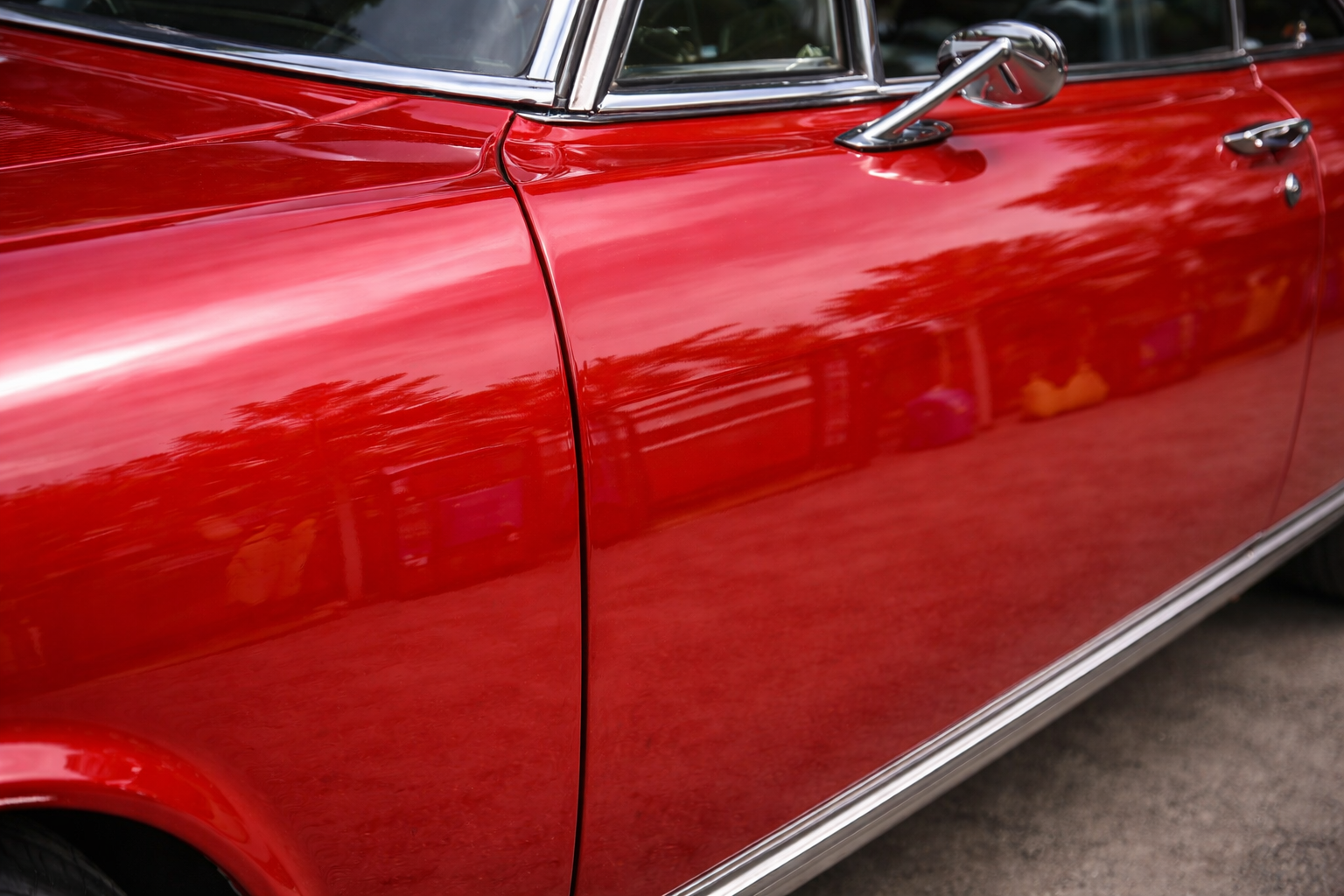
Single-stage gloss character / classic panel reflection
02

Basecoat/Clearcoat (Durability + Repairability)

Base/clear gives strong UV resistance, deeper clarity, and easier long-term maintenance. It's often the smart move for driven cars and trucks, especially if you want a show-level finish with durable protection.

  • More forgiving for correction and polishing
  • Clearcoat selection matters (solids, UV, film build)
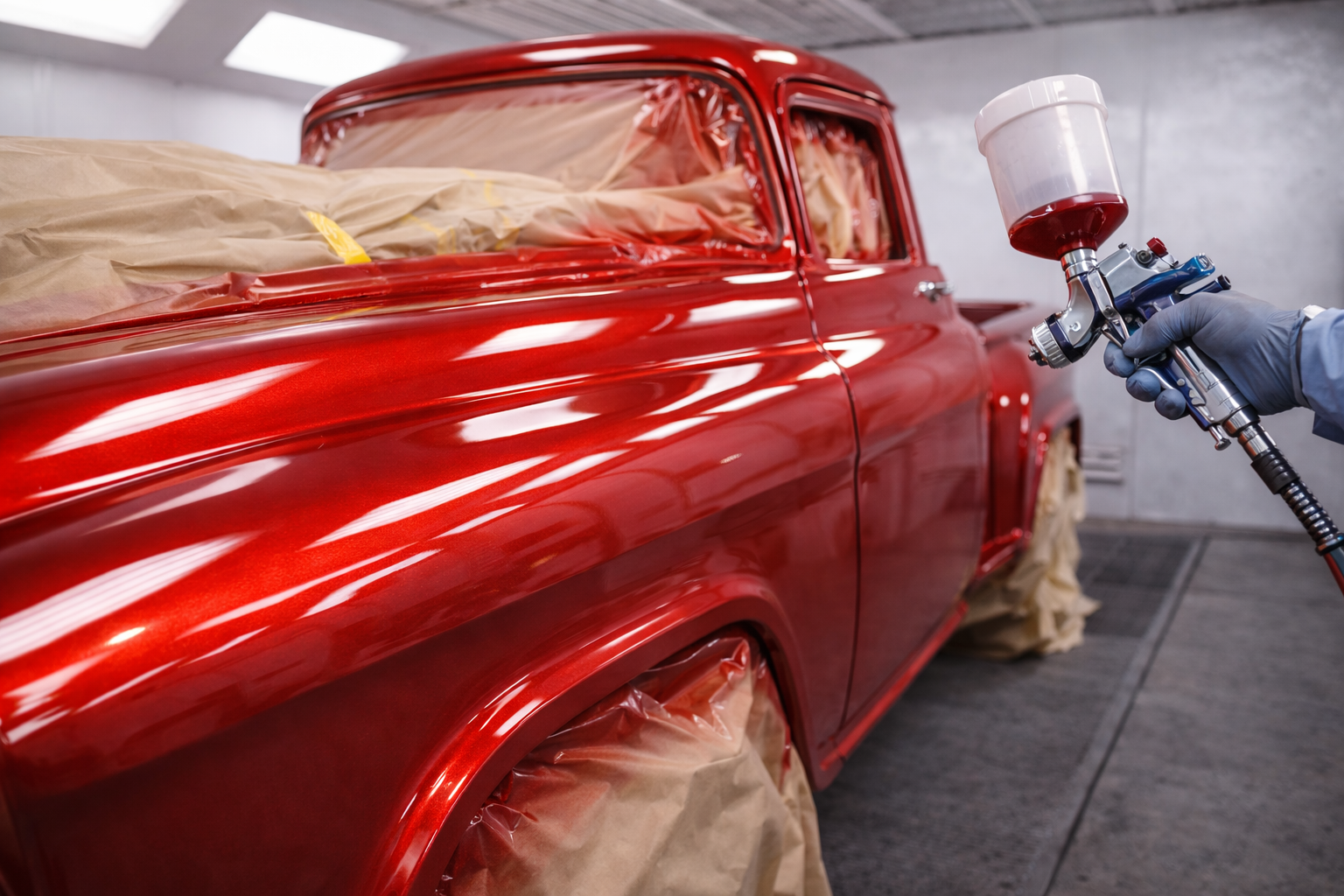
Basecoat spray / clearcoat wet coat / booth lighting
03

Tri-Coat / Pearl Systems (Consistent Coverage or It Shows)

Pearls and tri-coats are beautiful, and brutally honest. Gun distance, overlap, and pass timing must be consistent across every panel. A slight variation creates striping, blotching, or tone shifts that are obvious in daylight.

  • Strict technique control (overlap, speed, distance)
  • Best results require panel strategy and uniform booth lighting
Pearl/tri-coat effect in sunlight / panel consistency shot
04

Candy & Custom Finishes (High Risk, High Reward)

Candy finishes look incredible when done right, and expensive when done wrong. Because color depth builds with each pass, inconsistencies stack. One mistake can force a full redo to keep panels matching.

  • Requires strict pass count consistency across panels
  • Ideal for controlled builds with defined show goals
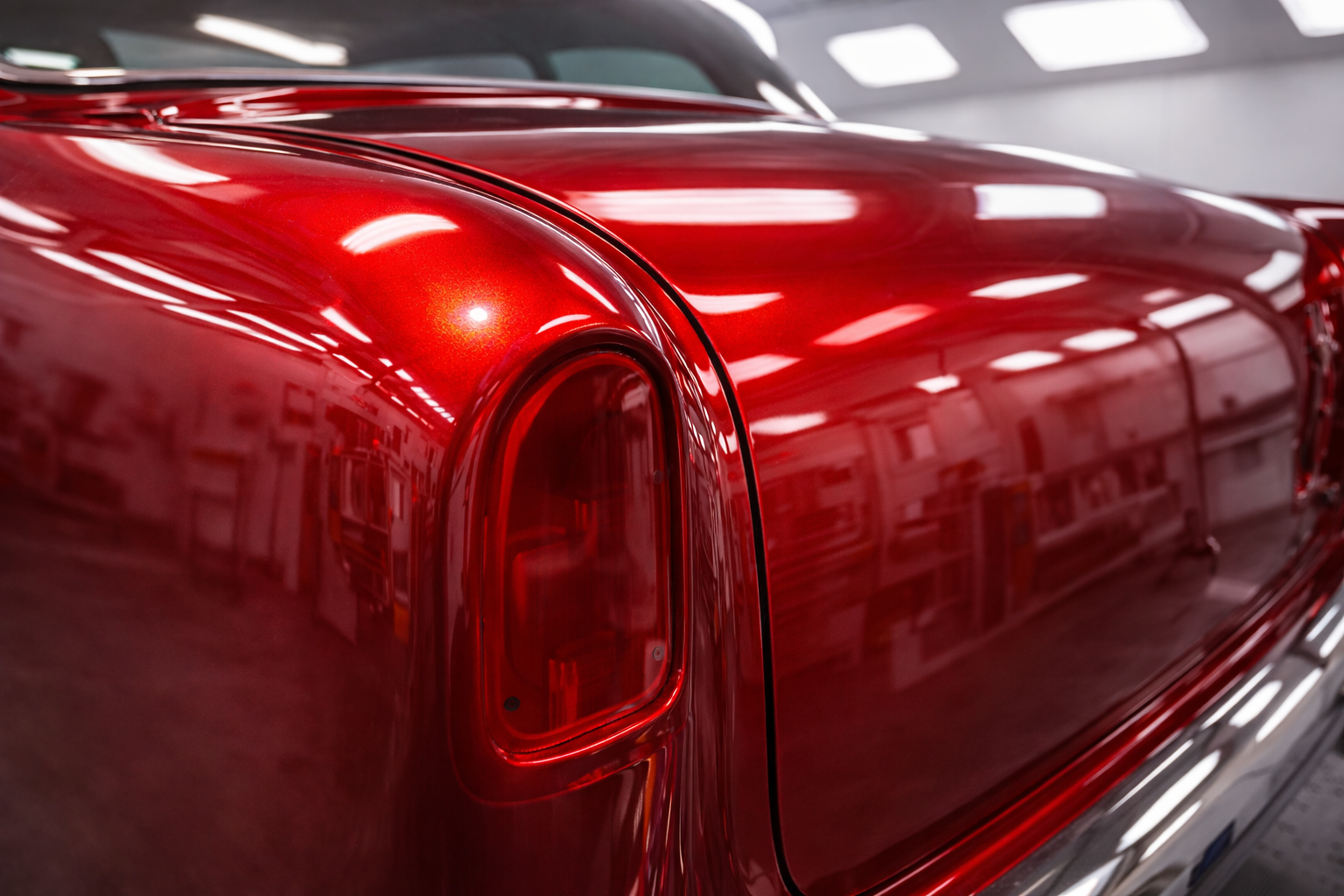
Candy depth close-up / custom paint booth shot

Premium Brands (Materials Matter)

With paint, you don't get to hide behind marketing. Quality shows in coverage, flow, UV stability, and long-term behavior. We spec premium systems and match products correctly across the stack: primer, sealer, base, and clear.

Premium paint lines we work with (examples)

Placeholder list (swap to what you actually use): PPG, BASF Glasurit/R-M, Axalta (Spies Hecker/Standox), Sherwin-Williams, House of Kolor (custom), etc.

PPG (placeholder) Glasurit (placeholder) Spies Hecker (placeholder) Standox (placeholder) House of Kolor (placeholder)

Why tools and environment matter

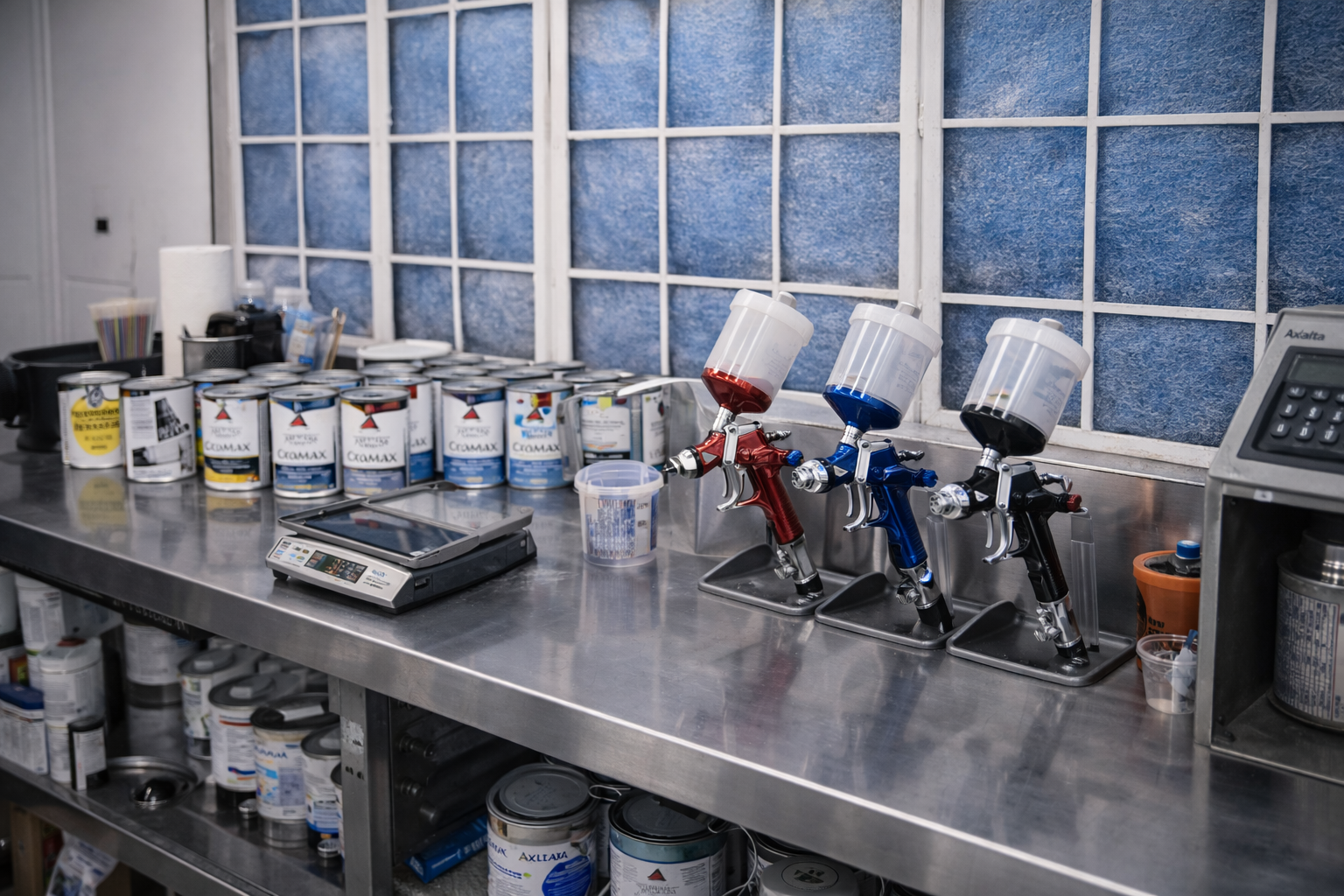
Premium paint doesn't save bad process. The booth, air supply, filtration, mixing accuracy, and gun setup are part of the finish. One mistake can destroy a coat: fisheyes, solvent pop, dry spray, runs, dirt nibs, or adhesion failure.

Air quality
Dry + filtered
Contamination = fisheyes.
Gun setup
Correct pattern
Bad atomization shows.
Timing
Flash + cure
Rushing ruins coats.
Spray booth filters / paint mixing bench / premium gun setup

Our Painting Process (The Full Stack)

This is the real work. Painting is a controlled sequence. Skip steps, mix brands wrong, or rush flash times, and the paint fails later.

  1. 1
    Surface Inspection & Contamination Control

    Identify silicone, old coatings, questionable repairs, rust bleed-through risks, and adhesion issues. If contamination isn't handled early, it shows up later as fisheyes, lifting, or edge mapping.

  2. 2
    Substrate Prep (Strip to the Right Level)

    Bare metal isn't always required, but correct prep always is. We prep based on what's underneath and what the system needs, not what's fastest.

  3. 3
    Epoxy Primer (Seal the Metal)

    Epoxy is your foundation layer: chemical seal, moisture barrier, and stable base for the rest of the stack. Apply it wrong and you're building failure into the car.

  4. 4
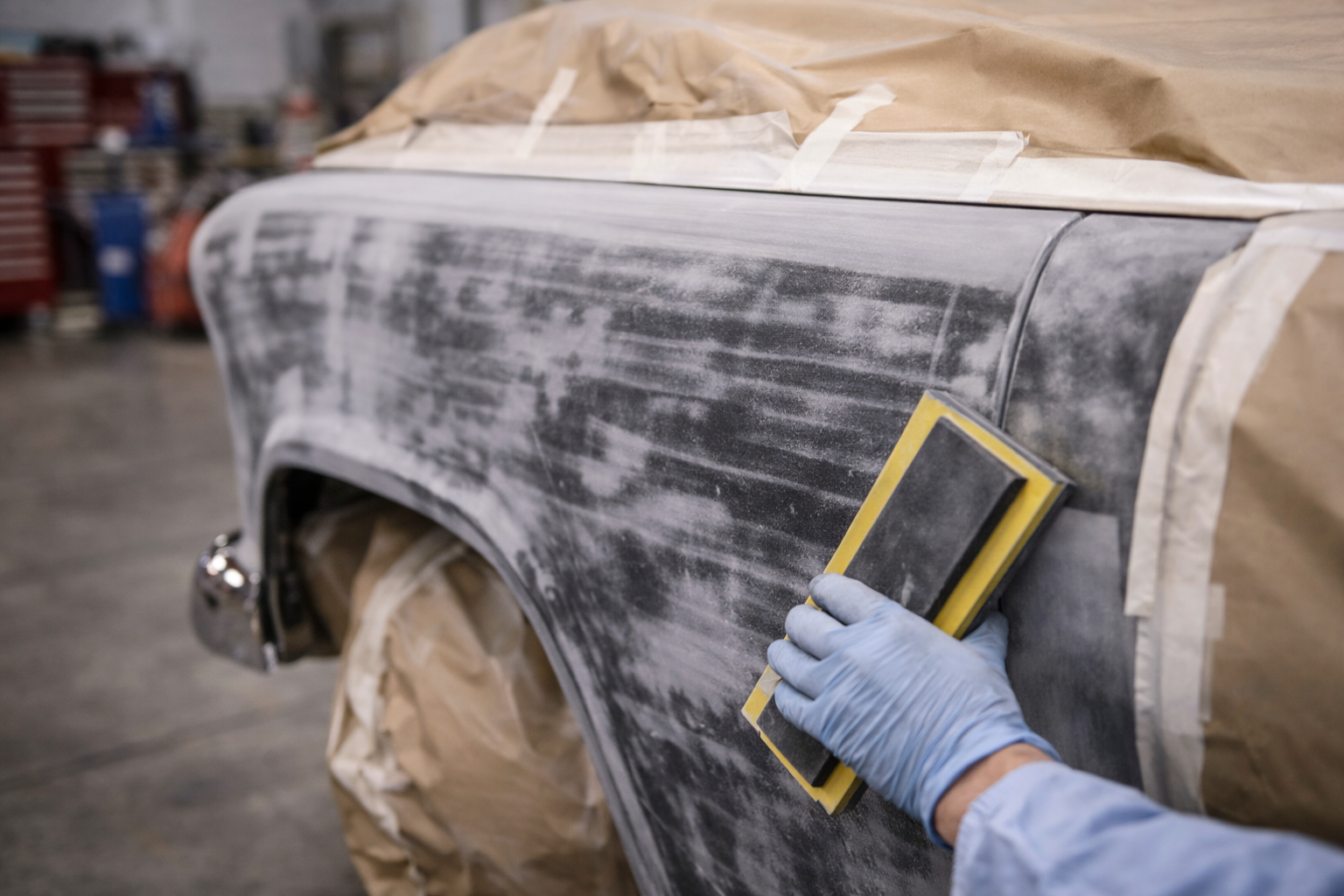
    High-Build Primer + Guide Coat + Blocking

    This is how you get straightness. Guide coat reveals truth. Blocking creates the reflections you see in the final finish. Shortcuts here are permanent.

  5. 5
    Sealer (Uniform Base for Color)

    Sealer levels absorption and helps color lay down consistently. It's also insurance against patchy coverage and tone shifts on complex systems like pearls and tri-coats.

  6. 6
    Color Match, Test Spray, and Panel Strategy

    We validate color and sheen in the lighting that matters: real daylight and controlled booth lighting. Test sprays and panel strategy prevent mismatches across doors, fenders, and hoods.

  7. 7
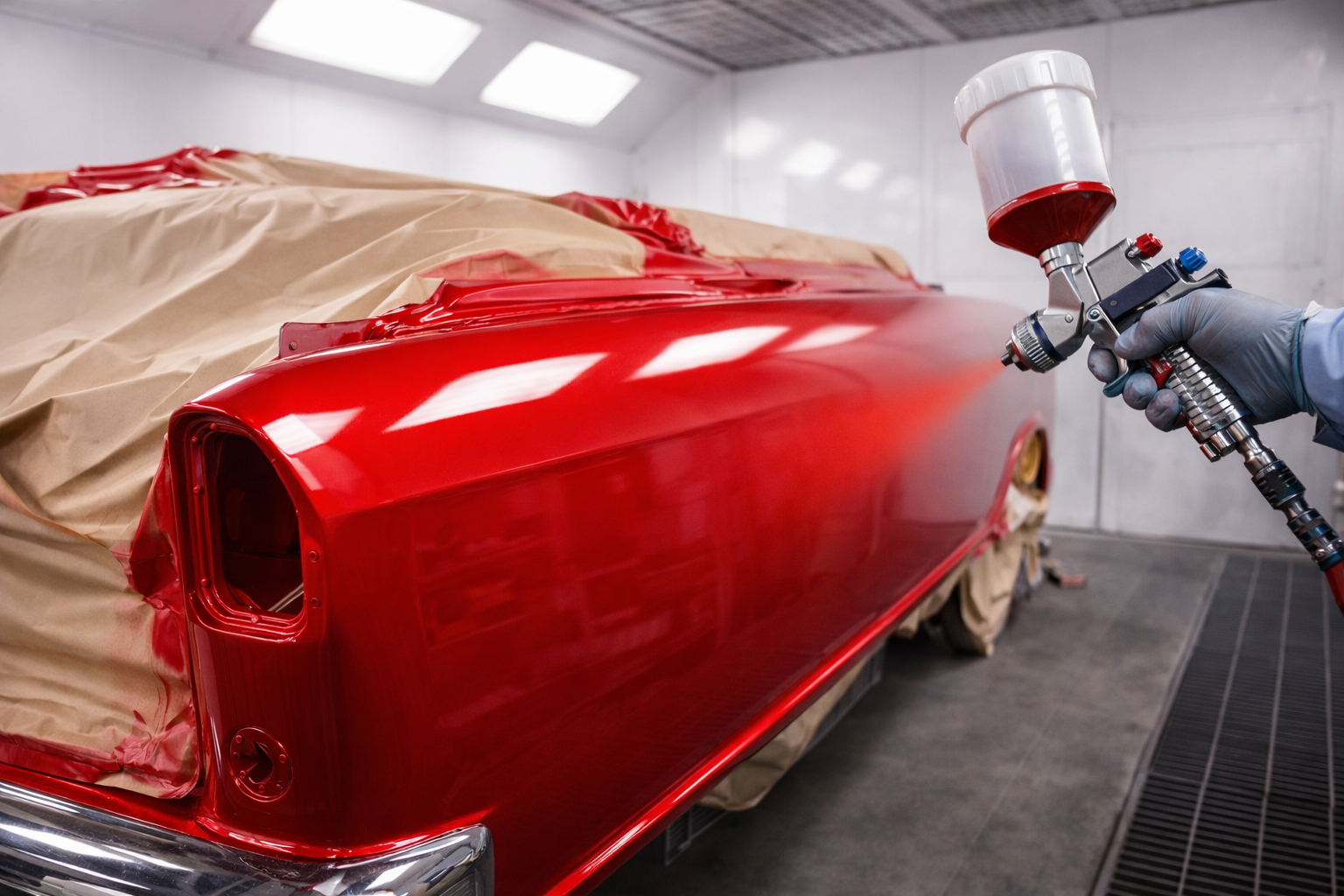
    Spray Application (Gun Setup + Technique Control)

    Correct air pressure, fluid control, fan pattern, overlap, and pass speed. This is where one mistake ruins an entire coat: runs, dry spray, mottling, striping, or trash in the finish.

  8. 8
    Flash Times, Temperature, and Cure Schedule

    Flash and cure aren't suggestions. They control solvent escape, film build stability, and long-term durability. Rushing this step creates solvent pop, dieback, or premature failure.

  9. 9
    Cut & Polish (Show-Level Refinement)

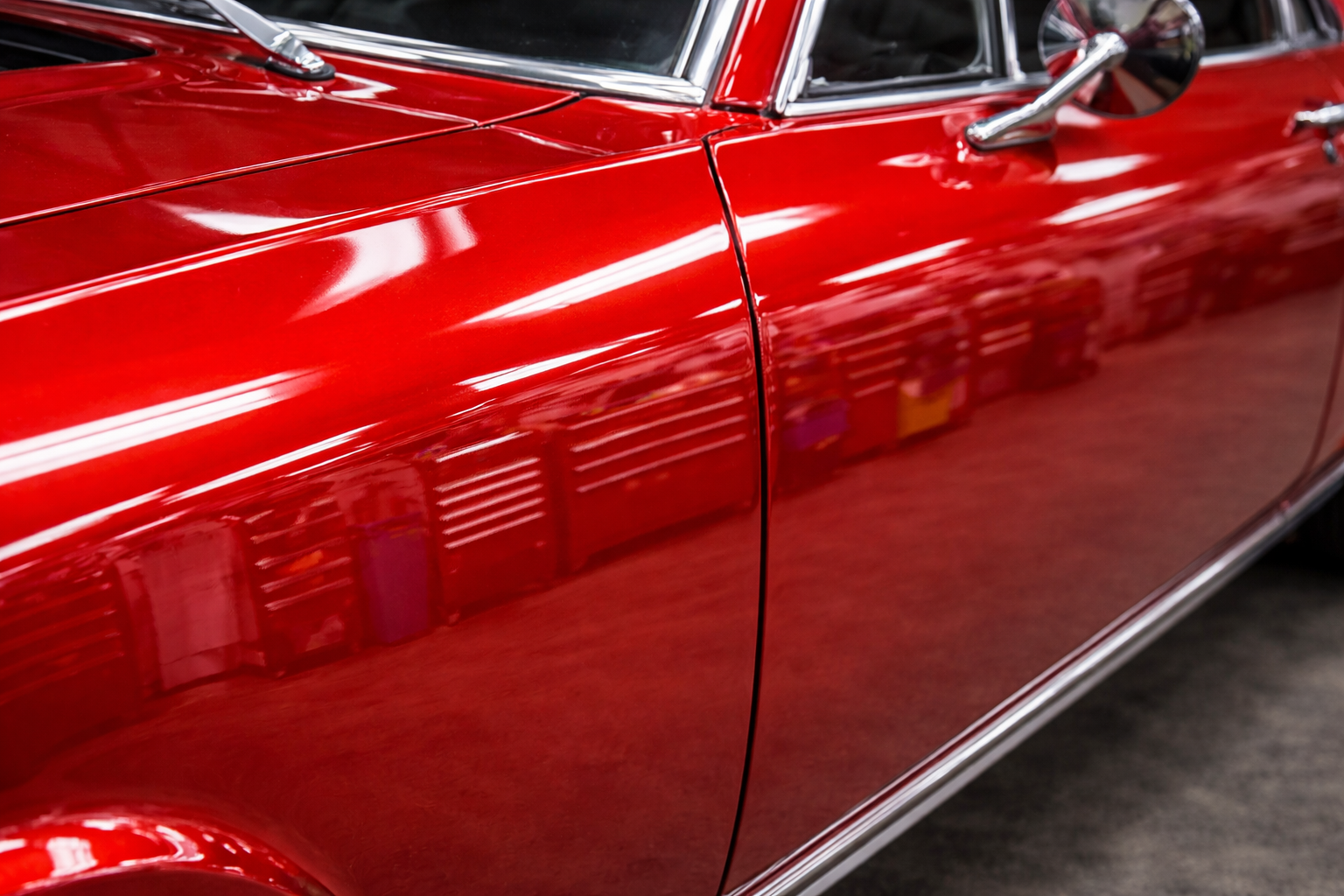
    After cure, we refine: remove minor texture, correct nibs, and bring uniform reflections without thinning the system. The goal is clean depth, not "burned edges."

  10. 10
    Final QA (Light Checks + Consistency)

    Inspect under multiple light sources, check panel-to-panel consistency, edges, jambs, and transitions. This is where a "nice paint job" becomes a premium finish.

Blocking + guide coat
Booth spray application
Cut & polish reflection

Why "one mistake" is expensive

Paint failures aren't just ugly. They're time bombs. A single contamination event can force stripping and respraying. And if panels don't match, the fix isn't "touch it up." The fix is doing it over until it's consistent.

If you want it right
Scope, system, and finish goal, clear up front.